
The Bird that Connects Continents
cajuntravel2026-08-11T10:51:56-05:00Pigeons, Pigeonniers, and Colonial America
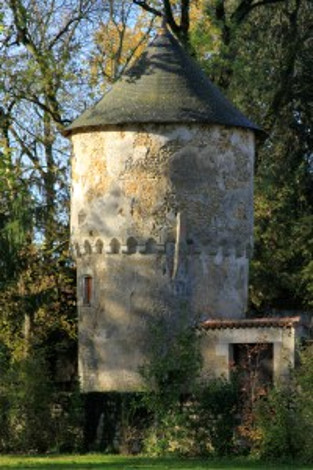
Pigeonnier in Civray, France. Photo by Poitoucharentesinphotos.
If you’ve traveled through rural France or have seen the haunting beauty of historic houses in Louisiana, you may have encountered a strange structure. This two-story, usually wooden tower, is shed-like in appearance. In most cases, it stands apart from the main house on the sprawling grounds of plantation homes. Despite humble appearances, these buildings were not used as simple storage spaces. In France, Louisiana and St. Landry Parish they are known as pigeonniers while other countries name them as dovecotes. These unassuming structures play a part in the interesting history of the bird that connects continents, the pigeon.
Domesticated during ancient times and used by the Egyptians, Romans, and throughout the Middle Ages to send messages, pigeons were brought to the Americas in the early 17th century by European colonists. The grey spackled avians were used for their incredible homing ability to send messages and as a source of food. Their droppings could even be collected for fertilizer. All in all, the pigeon was a very useful bird, so it would make sense that the early colonizers of Louisiana brought their pigeons along with them.
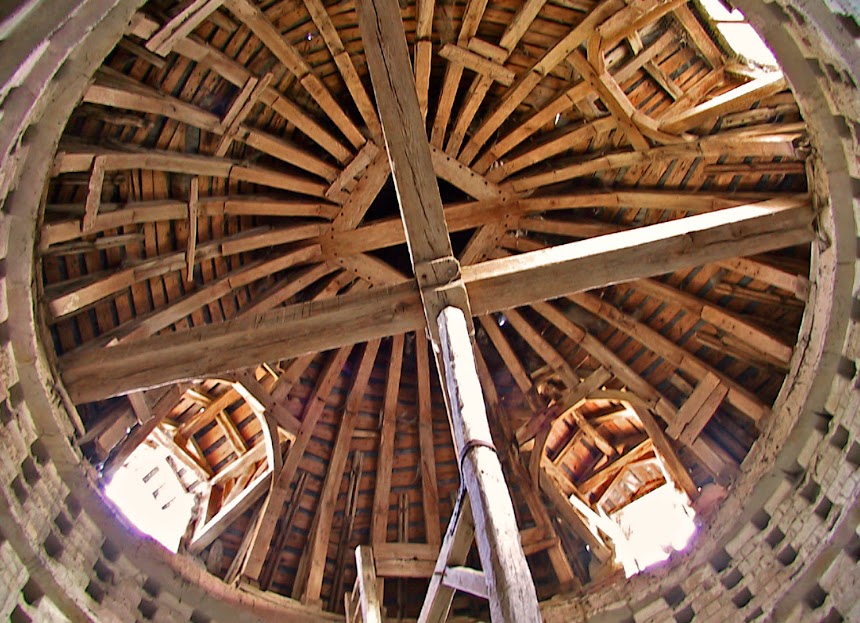
Interior of the pigeonnier at Château de Villesavin, near Chambord in the Loire Valley. Photo by Ken Broadhurst.
There are several waves of French influence in Louisiana. The most prominent of which is when the territory became a colony of France in 1682. Plantations, and the slaves that built those plantations, are inextricably intertwined in Louisiana’s people, food, and architecture. Many Creole people trace their history back to these initial Frenchmen and the slaves they brought. Then, there is the Grand Dérangement, when thousands of francophone refugees from Canada settled in the region, a process that started in 1765. These people became known as “Cajuns”, and their influence is well-known today.
The pigeonnier was where a wealthy family would house their stock of pigeons. Their architectural influence stems more from the initial wave of French settlers, a style that can be traced to western France and Normandy specifically. From the 1700-1800s, these pigeonniers were a particular marker of wealth because they signaled that a family could provide shelter – even for their pigeons. In mainland France dating back to Medieval times, it was yet another way for the ruling class to dominate peasants as it was illegal for those without wealth to make these structures. This stringent control of a valuable food resource wasn’t overturned until after the French Revolution in 1789.
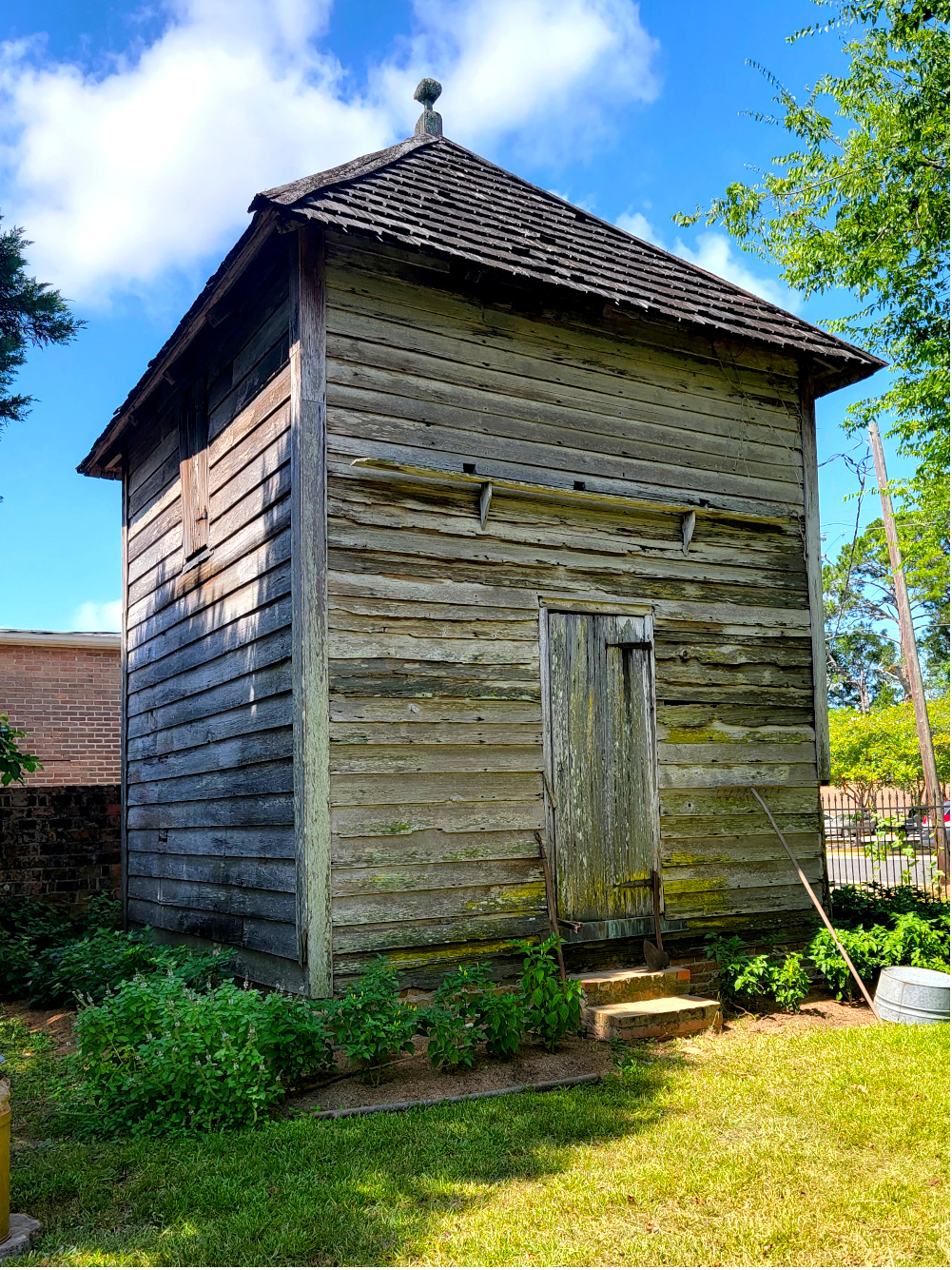
Pigeonnier at the Michel Prudhomme House in Opelousas, Louisiana.
The Michel Prudhomme House, built in 1790 and located in Opelousas is the oldest building in St. Landry Parish that still stands where it was originally built. The French Colonial Creole home has one of the few remaining pigeonniers in Louisiana. The outbuilding, made of cypress wood and pegged joints, still housed pigeons until recently. When you schedule a tour of the grounds, your guide may regale you with tales of the Prudhomme family sending their kids to sleep in the pigeonnier as a punishment.
The pigeonnier is far from the only interesting architectural quirk of the Prudhomme House. The construction of the main building used a method known as briquette entre poteaux. Porous bricks filled the spaces between posts and braces, then the walls were covered in a lime plaster to give it a smooth finish. The French building influence is particularly strong in this building.
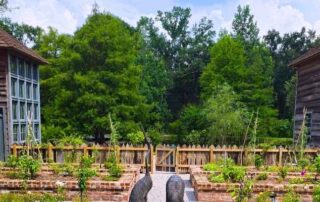
BeauBassin Farms & Gardens is a bed & breakfast and event venue in Sunset. The main house, called the LaTour House, is a historic home originally built in 1835. It was moved to Sunset in the 1970s and recent renovations have opened it to the public for people looking for a place with historic charm and modern amenities. On the stunning grounds – complete with metal sculptures, miniature donkeys, fountains, and gardens that supplement their catering efforts – there stand two pigeonniers guarding the entrance to the ground’s vegetable garden.
These pigeonniers don’t hold pigeons. However, they do function as a greenhouse and storage shed. In their shape is an echo of the past that connects building techniques back to France. Their proximity to food makes it impossible to not remember how access to these resources were controlled by wealthy slaveowners of the past.
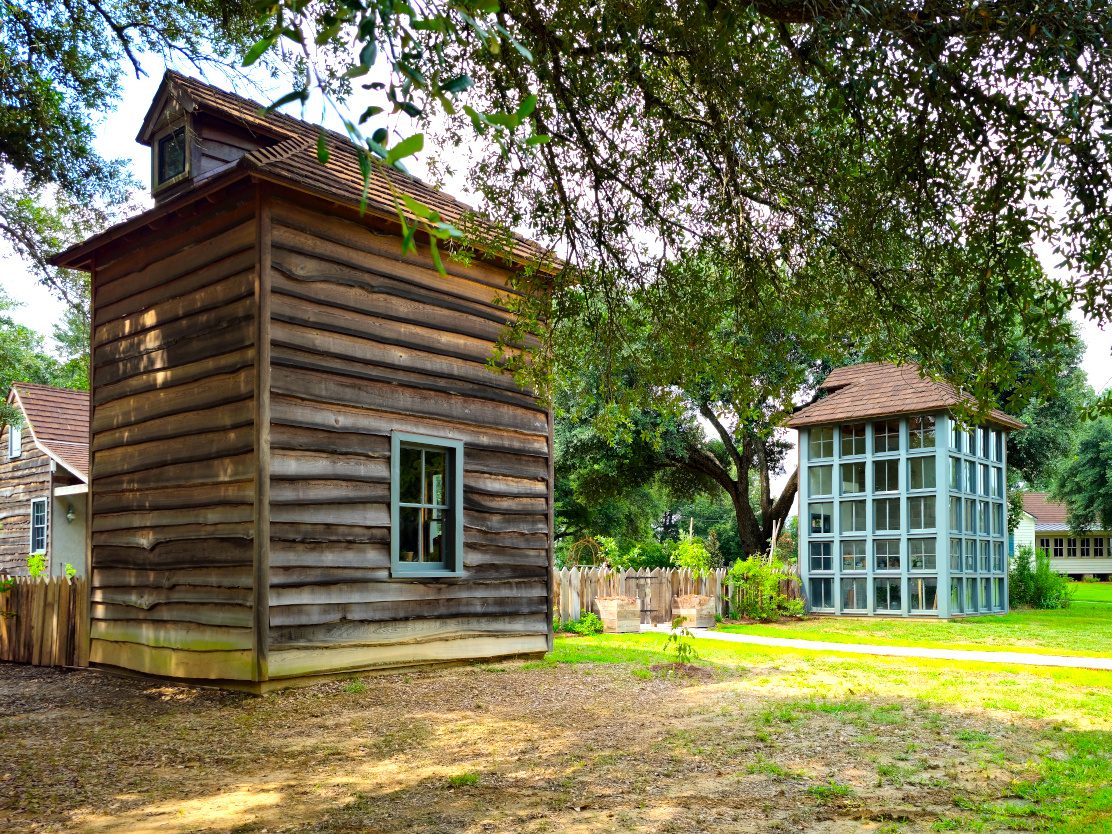
Two pigeonniers at BeauBassin Farm & Gardens in Sunset, Louisiana.
Did the architects of BeauBassin know of these connections and intentionally place these buildings in this way? Maybe, maybe not. What we do know is that architect Eddie Cazayoux, who also did work on the St. Landry Parish Visitor Center, which uses old and new building practices like bousillage, had a big influence on the BeauBassin grounds. The play of historical building practices and modern sustainability is one that Cazayoux is very familiar with. He isn’t the only connection BeauBassin has to the visitor center either. The two share an artist in metal sculptor. Russell Whitting created a stunning piece of birds in flight at BeauBassin as well as the Amédé Ardoin statue at the center.
Whitting is a self-described classicist with a contemporary execution. The BeauBassin statue he created has large metal birds of varying sizes, all facing outwards but stacked upon each other in a pointed tower. Their wings are pointed, sharp as knives with a slight curve. This piece seems to depict a swallow-tailed kite, based on the shape of the tail. The bird is a rare raptor native to the area and feels a far cry from the humble pigeon. However, seeing the statue with the pigeonniers in the background, it’s hard to not think of the pigeon flying to send out messages of all kinds or coming home to be eaten. Another function of the pigeonniers was a way to protect the pigeons from their natural predators, including raptors.
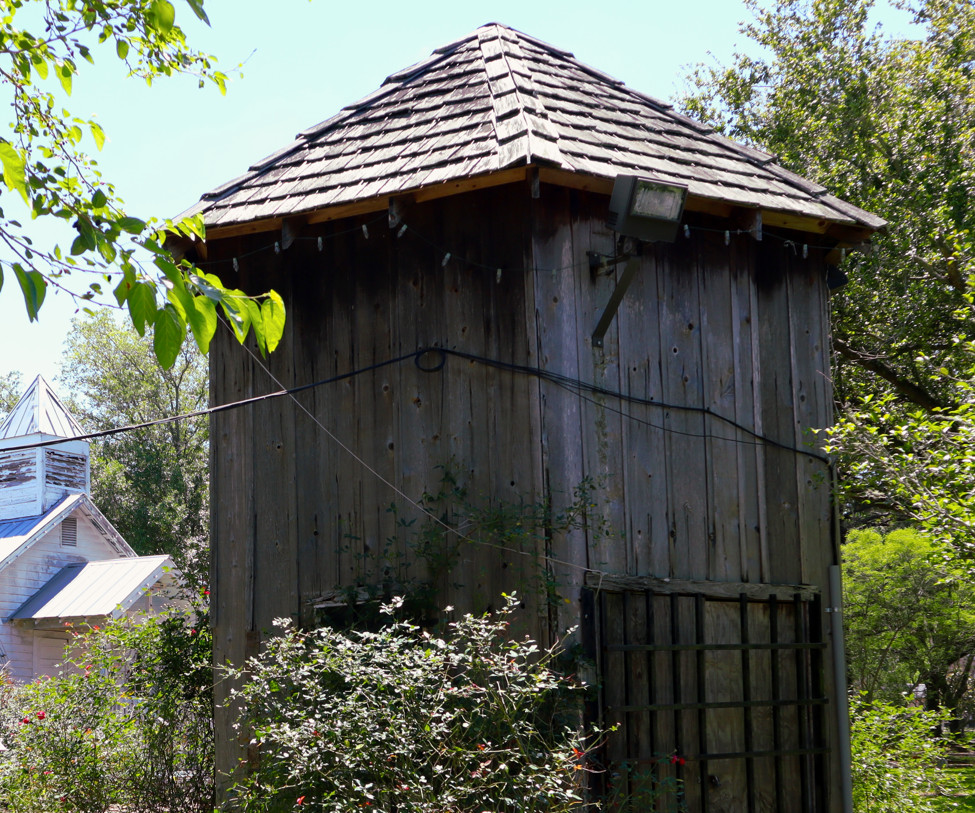
Replica pigeonnier at Le Vieux Village in Opelousas, Louisiana.
For those truly interested in the ins and outs of the architectural styles of the area, a visit to Le Vieux Village in Opelousas is a must. Here, historic houses without a home, find new life as museums and venue spots. When you walk the winding path through statues and trees, a replica pigeonnier, built in the 1970s, is there to greet you.
These buildings are a reminder of the complex connection between Louisiana, France, and the pigeon as a story told through architecture and the people that built them.